Guides Southern boobook
Boobook breeding season: September to February, mainly October
Southern boobook owls in your yard
That “mo-poke” through the bedroom window is Australia’s smallest and most common owl. Let it be, and keep rat poison out of its food. Australian Museum BirdLife Qld Government
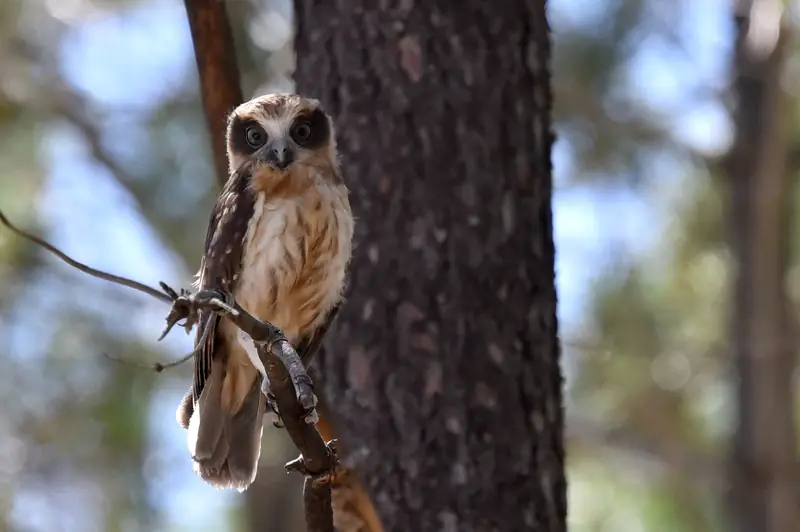

- Size
- 28 to 36 cm a little smaller than a magpie Australian Museum Australian Museum A southern boobook is 28 to 36 centimetres long. An Australian magpie is 36 to 44 centimetres.
- Out
- At nightwith some morning and afternoon activity, especially on dull days Australian Museum
- Eats
- Insects and small mammalsmoths and small bats snatched in mid-air, and mice Australian Museum BirdLife
- In WA
- Protectedlike all native animals DBCA, and not on the threatened list DBCA, Jul 2026
Owl calling at night
in Perth, or anywhere else in Australia? If it’s a two-note “boo-book”, that’s a southern boobook, saying its own name. It’s heard at night across most of Australia, “even in suburbia”. Qld Government Australian Museum
Southern boobook Ninox boobook
“boo-book”
Two notes, also written “mo-poke”, hence its other name, mopoke. 28 to 36 cm, chocolate brown, with big yellowish eyes. Australian Museum BirdLife
Tawny frogmouth Podargus strigoides
“oom oom oom”
“A soft, deep and continuous low oom oom oom.” A convincing owl impersonator, but it’s closer to the nightjars, and its weak feet lack an owl’s curved talons. Australian Museum
The patterns are drawn from each call as the Australian Museum describes it in words, not from recordings. Tap one to replay it. To hear a real boobook, the Queensland Government’s boobook page has a recording.
Seen one by day? Rule out its lookalike, the barking owl: bigger (35 to 45 cm), greyer, and streaked rather than spotted underneath. BirdLife
Is it owl breeding season
right now? For boobooks, it runs September to February, peaking in October. The nest is normally a tree hollow. Australian Museum
Breeding, Australia-wide Australian Museum
Calling most, near Mandurah Fulton 2017, one survey
- 2 to 3
- Eggs in a clutch, occasionally up to 5. Only the female sits on them. Australian Museum
- 42 days
- How long the young stay in the nest: six weeks of takeaway. Australian Museum
- Both
- Parents feed the chicks, and sometimes a second female pitches in. Australian Museum
Do boobook owls eat rats
and mice? Yes, and that’s the cruel catch: it’s how rat poison reaches them. Researchers class the southern boobook, with the barn owl, as a rodent predator. Cooke 2023 BirdLife
- A mouse or rat eats bait. With a second-generation poison, one feed can be a lethal dose. APVMA
- It keeps eating for days. It can take 5 to 10 days to die, still feeding on the bait, so even more poison builds up in its body. APVMA
- A boobook catches it. Boobooks hunt by watching and listening from a perch, then pounce on prey on the ground. Australian Museum Qld Government
- Even the chicks get it. Rat poisons turned up in WA boobooks that had only just left the nest, “indicating probable exposure prior to fledging”. Lohr 2018
- 72.6%
- Of 73 boobooks found dead or dying in urban and semi-urban WA, the share with rat poison in the liver. 50.7% had potentially dangerous levels. Lohr 2018 APVMA
- 53 of 73
- Of those boobooks, the number with brodifacoum, a second-generation poison. APVMA
- 42%
- Of dead boobooks tested in Victoria, SA and NSW, the share at levels where toxic or lethal effects would potentially have occurred. Cooke 2023 APVMA
Boobooks from more built-up areas carried more poison. Two poisons that the public doesn’t use were also found, so professional baiting played a part as well. Lohr 2018
Since 24 March 2026, second-generation baits may only be sold and used under the national regulator’s suspension instructions. APVMA
Owl in my backyard
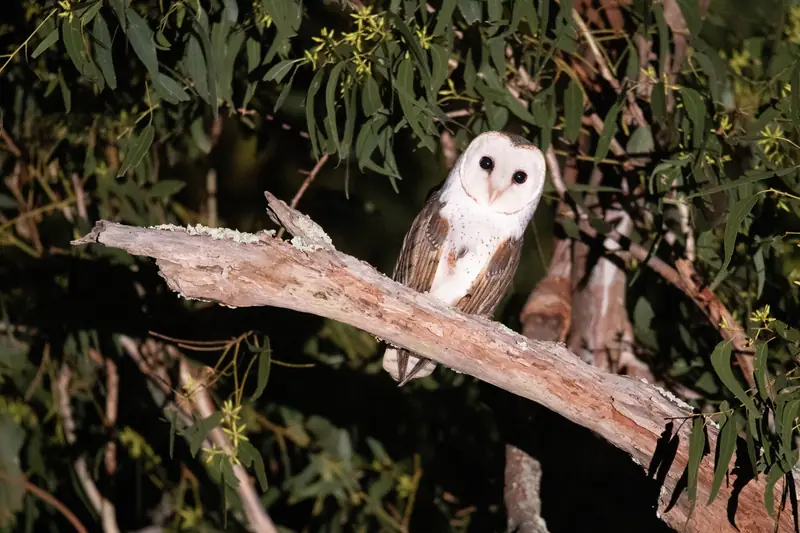
at night, or sitting in a tree by day? Lucky you. Leave it be. It’s hunting or resting, and it’s doing fine without help.
- Let it hunt. From a tall perch it watches and listens, snatches moths and small bats in mid-air, and pounces on prey on the ground. Australian Museum Qld Government
- One out by day is normal. Boobooks are often seen on open branches or in treetops during the day. Qld Government Keep pets and children back, and don’t crowd it. BirdLife Listening for one with the kids? Try the after-dark ideas in our backyard activities for kids.
- No spotlights, no recorded calls. BirdLife Australia’s code for birdwatchers: “Do not use spotlights, call playback or drones, especially around nesting or threatened species.” BirdLife
- Don’t feed it. In WA it’s an offence to feed native wildlife without lawful authority. BC Act s 155 DBCA says feeding can draw “an unnatural concentration of predators such as hawks and owls”. DBCA The feeding rule is explained in our magpie guide.
- Keep rat poison out of its food. Our rat poison guide covers ways to deal with rats and mice that don’t put owls at risk.
- A white fluffball in a mask? Young boobooks are almost all buff-white underneath, with dark brown face patches. Australian Museum If a young bird with feathers is on the ground, leave it alone and watch from a distance. DBCA
- Hurt, sick or dead? If it’s injured, ring the Wildcare Helpline on (08) 9474 9055, and don’t give it food or water unless a carer tells you to. DBCA If it’s sick or dead, don’t touch it: report it to the 24-hour Emergency Animal Disease Hotline on 1800 675 888, as H5 bird flu has been found in WA. DPIRD
Are boobook owls endangered
or rare? Neither, happily. It’s Australia’s most common owl, and it isn’t on WA’s threatened list. Australian Museum DBCA Here are the other questions people search, each answered in its first line.
Do boobook owls eat snakes?
Not that the sources we checked say. The Australian Museum lists insects, small mammals and other small animals. Its examples, and BirdLife’s, are moths, small bats and house mice. Not one of the three pages mentions snakes. Australian Museum BirdLife Qld Government
Is a tawny frogmouth an owl?
No, though it fools plenty of people. Frogmouths are more closely related to the nightjars, and their weak feet lack an owl’s curved talons. Their call is a low, continuous “oom oom oom”, not the boobook’s two notes. Australian Museum The name mopoke belongs to the boobook, after its call. BirdLife
How do I attract owls to my backyard?
Keep what they need, and keep poison out. Boobooks nest in tree hollows, and DBCA calls hollows “crucial habitats” that give native animals somewhere to nest. Australian Museum DBCA Owls hunt rats and mice, so poison in the yard can end up in them. Cooke 2023
Don’t use food or recorded calls to draw them in: feeding wildlife is an offence in WA, and BirdLife Australia asks birdwatchers not to use call playback. BC Act s 155 BirdLife
Do boobook owls use nest boxes?
We can’t tell you yet. Their nest is normally a tree hollow. Australian Museum Perth Zoo’s nest box guide says different animals need different boxes, but it gives no design for owls, and we haven’t found a study or agency guide on boxes for boobooks. Until we do, we won’t guess at plans. Perth Zoo
Can you keep an owl as a pet in Australia?
Not a wild one, in WA. The Biodiversity Conservation Act 2016 says a person “must not take fauna” or “must not possess fauna” without lawful authority. Taking includes capturing, and capturing includes catching, trapping and removing. BC Act ss 5, 149, 152
The Act does let you rescue an injured owl, care for it for a short time, and hand it to someone with lawful authority to care for it. Ring the Wildcare Helpline on (08) 9474 9055 first. BC Act s 161 DBCA
Our reading of the Act, not legal advice. Other states have their own laws.
Sources, checked 9 October 2026
- Southern boobook Australian Museum, updated 28 Jul 2022: smallest and most common owl in Australia; 28 to 36 cm; also called mopoke; urban habitats among others; insects and small mammals, mostly at night, some morning and afternoon activity on dull days; hunts from a tall perch, moths and small bats seized in mid-air; “boo-book” call; breeds September to February, mainly October; nest normally a tree hollow; 2 to 3 eggs (up to 5); female incubates, both sexes feed the young; 42 days in the nest; young buff-white below with dark brown facial discs
- Southern boobook Birds in Backyards, BirdLife Australia (no date shown; uses the older name Ninox novaeseelandiae): 25 to 33 cm; feeds on insects and small mammals such as the house mouse; call “boo-book” or “mo-poke”, and called mopoke after it; status secure in every state; the barking owl is larger (35 to 45 cm), greyer and streaked rather than spotted
- Southern boobook Queensland Government, last reviewed 29 Jun 2026: the call is heard at night across most of Australia, “even in suburbia”; often seen on open branches or treetops by day; ground prey is pounced on; a recording is on the page
- Tawny frogmouth Australian Museum, updated 10 Dec 2025: often confused with owls but closer to nightjars; weak feet without curved talons; call “a soft, deep and continuous low oom oom oom”
- Eastern barn owl Australian Museum, updated 29 Jul 2022: up to 39 cm; generally a quiet bird; a rough, hissing screech; feeds mostly on small mammals, rats and mice
- Australian magpie Australian Museum, updated 12 Jul 2024: 36 to 44 cm
- Fulton 2017, owl survey of the Peel–Harvey Estuary Australian Journal of Zoology 65(2): 71–76: southern boobooks the most common owl detected (23 detections); detectability through unprompted calls significantly greater in August (late winter); reported declines in south-eastern and inland Australia
- Threatened and Priority Fauna List, July 2026 DBCA, updated 31 Jul 2026: the southern boobook is not listed (the only Ninox entry is the barking owl’s south-west subpopulation)
- Living with native wildlife DBCA: all native fauna is protected under State and Commonwealth law
- Biodiversity Conservation Act 2016 (WA) version 00-i0-01, as at 25 Sep 2025: s 5 (“take” includes to capture; “capture” includes to catch, trap and remove), s 149 (taking), s 152 (possessing), s 155 (feeding, fine up to $20,000), s 161(2) (rescuing and temporarily caring for injured fauna)
- Supporting wildlife in urban areas DBCA: feeding can lead to “an unnatural concentration of predators such as hawks and owls”; tree hollows are crucial habitat and nesting sites
- Nest boxes for native animals Perth Zoo (linked from DBCA; no date shown): different animals need different types of boxes; no owl design given
- Ethical birdwatching BirdLife Australia (no date shown): keep an appropriate distance; no spotlights, call playback or drones, especially around nesting or threatened species
- Wildcare Helpline DBCA: the helpline number; no food or water unless a rehabilitator advises; a young bird on the ground with feathers: leave it alone and watch from a distance; don’t keep wildlife without expert advice
- H5 bird flu in Western Australia DPIRD, updated 12 Oct 2026: H5 found in a small number of seabirds in WA; avoid sick or dead wild birds and report them to the 24-hour Emergency Animal Disease Hotline on 1800 675 888
- Rodenticides APVMA, updated 26 Jun 2025: a second-generation lethal dose can be eaten in a single feed; rodents die 5 to 10 days after a lethal dose and can keep feeding on the poison meanwhile; higher risk of secondary poisoning
- APVMA certifies that second-generation anticoagulant rodenticides should be restricted chemical products APVMA news, 10 Mar 2026: second-generation products suspended for one year from 24 March 2026, and supplied or used only under the published instructions
- Lohr 2018, anticoagulant rodenticide exposure in an Australian predatory bird Science of the Total Environment 643: 134–144: boobooks found dead or moribund; 72.6% exposed, 50.7% above 0.1 mg/kg; more exposure with more developed land around; difethialone and flocoumafen, not used by the public, also found; poisons in recent fledglings
- Anticoagulant rodenticides review technical report APVMA, Dec 2025, Appendix A: Lohr 2018’s 73 boobooks came from urban and peri-urban areas of WA, and brodifacoum was in 53 of them (Table 109); Cooke 2023’s birds came from Victoria, SA and NSW
- Cooke and others 2023, “Silent killers?” Science of the Total Environment 904: dead owls and frogmouths; potentially toxic or lethal levels in 42% of southern boobooks and 80% of barn owls; southern boobooks and barn owls named as rodent predators
Study figures are for the birds each study tested, most of them found dead or dying, not for whole wild populations. Sizes differ between sources; we use the Australian Museum’s.